
Submarine cable security and resilience
12 March 2026 | Regulation and Policy, Strategy
Franck Chevalier | Patrick Kidney
Report | Digital infrastructure
"These reports highlight the critical importance of resilient subsea cables to Europe’s digital future and present a clear set of risk‑based measures that enable governments and industry to take co-ordinated, practical steps to strengthen this essential infrastructure."

Europe’s digital economy depends on submarine cables carrying over 97% of global traffic. Rising geopolitical tensions, ageing infrastructure, supply‑chain dependencies and physical vulnerabilities have made resilience a strategic imperative. Recent incidents across Europe, the Red Sea and high‑sea corridors reinforce the urgency to strengthen security and redundancy.
Two recent reports by the European Commission (EC)’s Expert Group on Secure and Resilient Submarine Cable Infrastructure offer a full blueprint for safeguarding Europe’s digital infrastructure and are essential reading for:
- European and national policy makers
- telecoms operators and cable owners
- hyperscalers and cloud providers
- critical infrastructure agencies
- NATO, ITU, ICPC1 and maritime authorities
- investors and digital infrastructure financiers.
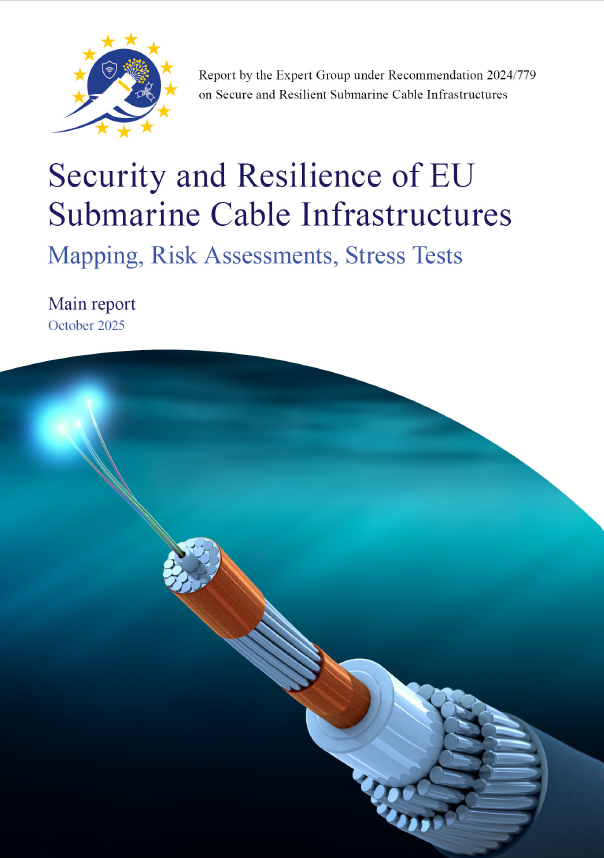
Report 1 – Mapping, Risk Assessments, Stress Tests
This foundational report provides the European Union (EU)’s first consolidated mapping and union‑wide risk assessment, including:
- detailed mapping of existing and planned EU cable routes
- seven EU‑wide risk scenarios (covering physical, cyber, supply-chain and natural hazards)
- stress‑test guidance for operators, maintenance providers and Member States.
Why it matters
It establishes the baseline understanding of threats, vulnerabilities and dependencies across Europe’s submarine infrastructure – the essential first step towards strengthening resilience.
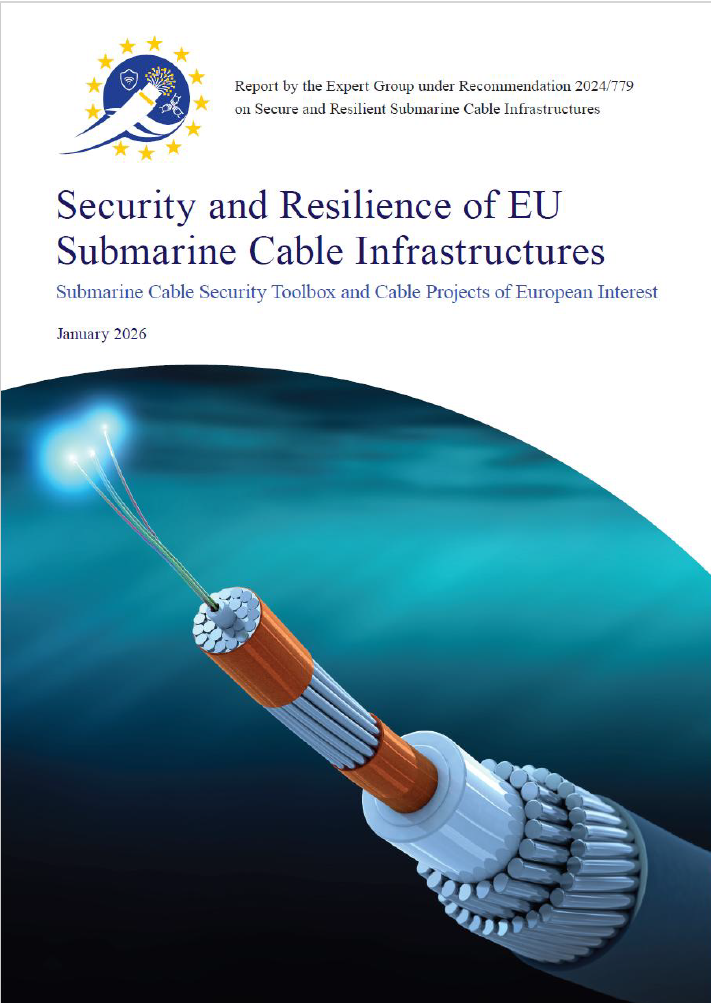
Report 2 – Cable Security Toolbox and CPEIs
This follow-on report turns assessment into action, presenting:
A toolbox of 10 measures for cable security
A practical set of strategic, technical and support measures covering:
- redundancy
- repair capability
- supply-chain security
- regulation
- physical security
- cyber security
- monitoring and more.
The toolbox sets out practical actions that can be adopted by the EC, Member States and the industry to mitigate the threats and dependencies identified in our EU-wide consolidated risk assessment.
13 Cable Projects of European Interest (CPEIs)
A set of priority regions and initiatives identified for targeted EU investment, including:
- the Baltic Sea, North Sea and North Atlantic
- alternative Europe–Asia routes (Arctic and Mediterranean)
- resilience routes for Africa, Latin America and the Caribbean
- maintenance vessel renewal and modular equipment stock.
Why it matters
These recommendations guide EU funding, strengthen redundancy, reduce geopolitical dependency and address the single points of failure identified in Report 1.
1 ICPC stands for International Cable Protection Committee.
Authors

Franck Chevalier
Head of Technology
Patrick Kidney
PartnerRelated items
Podcast
Wireless networks evolution and digital sustainability: what is Arcep’s approach?
Article
China Unicom’s Tone Tone shows how embedding network-delivered AI can result in mass adoption
Perspective
Broadcom supports cloud-native networks and automation through the VMware Telco Cloud Platform