
KPN leads its peers on downstream emissions and waste, but all European operators have more to do
"KPN leads our downstream benchmark, but meaningful impact will require telecoms operators to scale their initatives to reduce emissions and e-waste across markets, device portfolios and customer groups."

Most operators have introduced measures to reduce downstream customer-related emissions and waste, but KPN, BT and Deutsche Telekom have emerged as clear leaders. They have invested in initiatives that span product design, take-back logistics and verified refurbishment and recycling. The next challenge is to scale these initiatives consistently across the countries in which they operate, and across products and customer groups.
Downstream emissions, including those linked to device manufacture and end-of-life waste, can account for more than 20% of an operator’s total carbon footprint. These emissions are also among the most complex and costly emissions to reduce. Operators must therefore have a clear understanding of industry best practice to assess their relative performance and to identify areas for improvement.
This article showcases Analysys Mason’s new best practice analysis, benchmarking the downstream customer sustainability strategies of 11 leading European telecoms operators by size.1 It highlights the leading performers and industry‑average performance, and identifies the gaps that will shape the next phase of progress.
Analysys Mason’s downstream benchmarking framework provides a clear, comparable view of operator progress
To reduce downstream Scope 3 emissions, particularly those from customer use of operator-sold products (GHG Protocol Category 11) and their end-of-life treatment (Category 12), operators need a co-ordinated business strategy that spans multiple teams and functions.2 The way that devices are managed at the end‑of‑life stage has a direct effect on downstream emissions. Extending device lifecycles through reuse and high‑quality recycling schemes helps to avoid the embodied carbon associated with new device production, whereas landfill and incineration contribute to additional disposal‑related emissions.
Analysys Mason benchmarks operators against eight key criteria (Figure 1), designed to capture industry best practice, translating complex, multi‑dimensional sustainability strategies into a structured, evidence‑based assessment of operators’ progress in reducing downstream emissions and waste.
Figure 1: Analysys Mason’s benchmark framework criteria for best practice in managing downstream emissions and waste
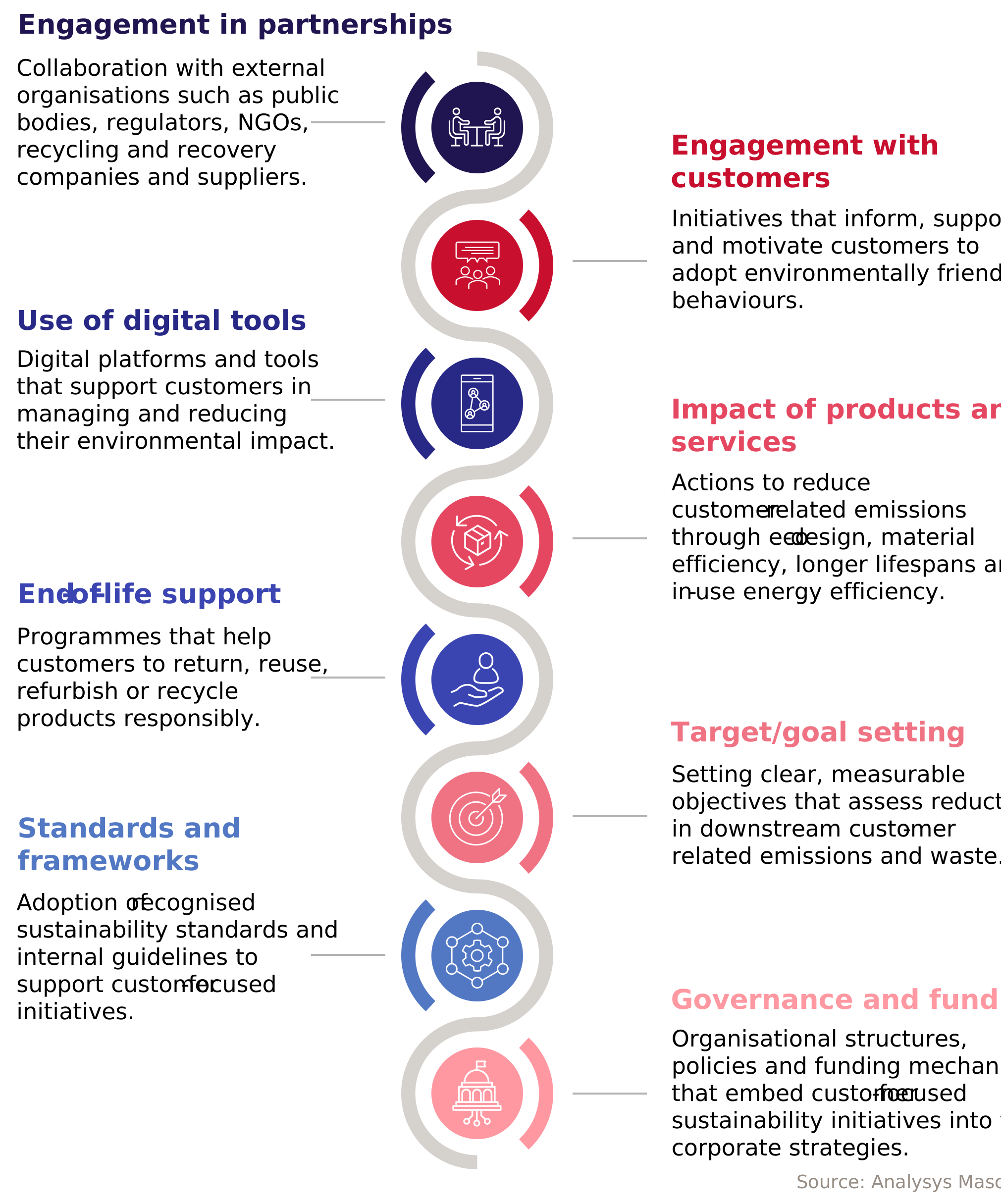
Each criterion is broken down into a set of initiatives that collectively form the basis of the operator scoring framework used to assess operators’ performance. Each initiative is assessed against factors such as customer coverage, geographical reach and device coverage,3 with scores weighted to reflect whether the initiative is a proven achievement, a stated ambition or an early‑stage action. Performance is assessed by comparing European operators’ initiatives against global industry practice, which provides a holistic view of their progress.
Many operators are taking action, but the leaders distinguish themselves with a broad range of initiatives across all criteria
Most operators have implemented baseline measures to reduce downstream emissions such as establishing drop-off and take‑back schemes for old devices, participating in key industry working groups, e‑waste awareness campaigns and providing refurbished options for devices (though mainly for smartphones).
Our analysis positions KPN as the clear leader, followed by BT and Deutsche Telekom (in that order). KPN demonstrated an end-to-end approach to reducing the environmental impact of their products and services. For example, the company has established long‑term engagement with governments to shape e‑waste policy, as well as public- and private-sector partnerships to strengthen device recycling and refurbishment pathways. It is also working closely with suppliers through R&D and product design partnerships to improve device energy efficiency and recyclability.
KPN has also invested in a range of public education campaigns to improve awareness and take-up of e‑waste recycling. At the end-of-life stage, the company has implemented an extensive network of device drop‑offs, alongside device‑as‑a‑service/device leasing models, repair services to extend products lifecycles, and programmes to repurpose devices for social projects. Collectively, these initiatives support greater adoption of low‑carbon devices and drive higher participation in end‑of‑life return and recycling schemes. As a result, KPN achieved a reduction of 10% in downstream Scope 3 emissions between 2018 and 2024.
Figure 2: Overview of the customer sustainability benchmark scores for European operators in Analysys Mason’s analysis, including the top three performers4
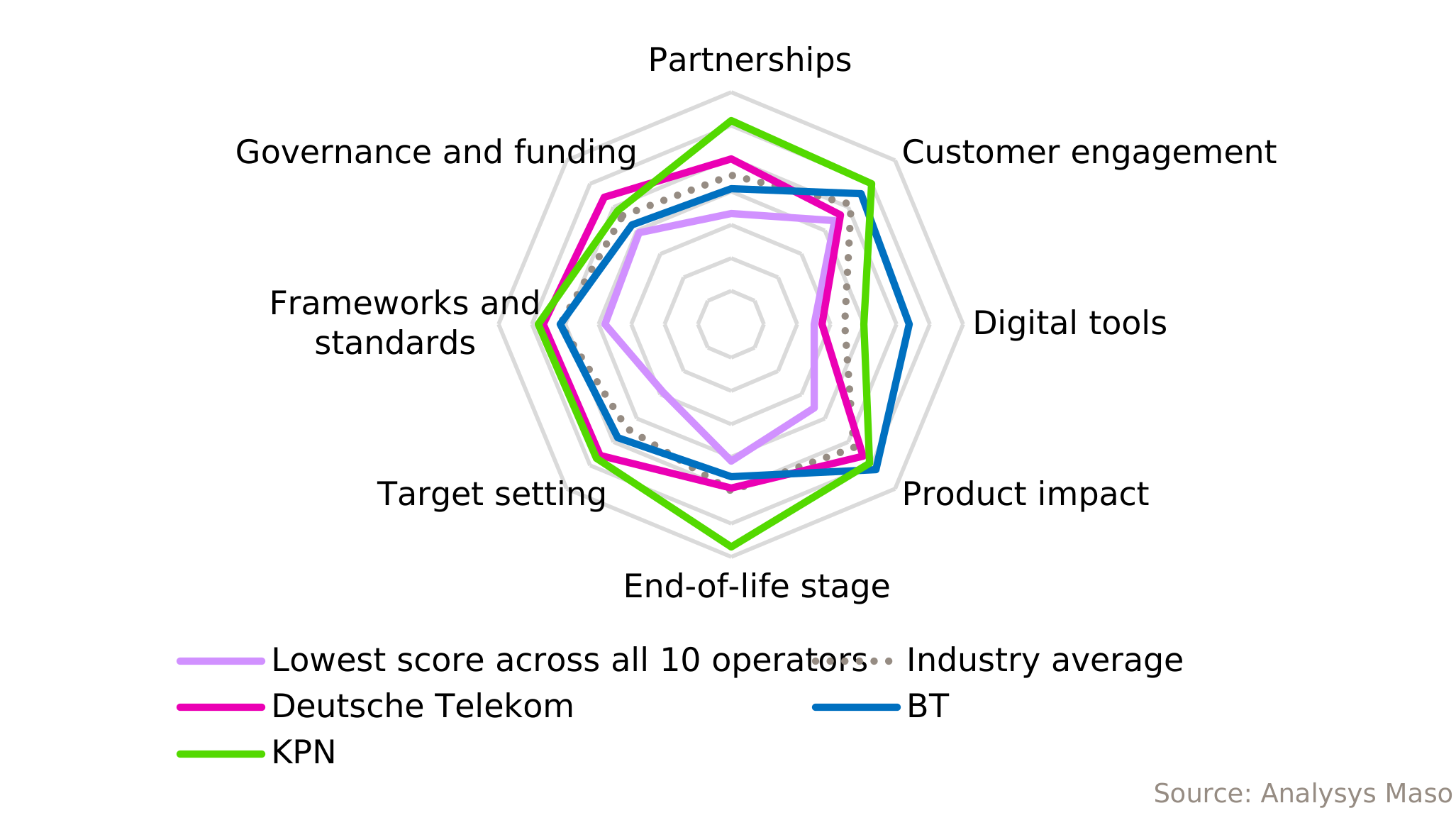
Operators that could demonstrate measurable progress against defined targets and goals scored higher in our benchmark analysis. Leading operators were able to demonstrate sustained, multi‑year progress towards reducing downstream emissions, increasing device recovery rates and growing the sales of refurbished devices sold.
Most operators have yet to fully develop digital platforms and tools to help customers to improve device efficiency and manage the end‑of‑life stage. Only around half of the operators that we assessed have invested in tools that show customers the carbon and energy impacts of using their services.
BT achieved the highest score in this area, offering energy and carbon dashboards for business customers across its operating markets, with more advanced functionality than its peers. The platform includes energy and carbon modelling, actionable recommendations and scenario analysis to support customer decarbonisation strategies.
No operator that we assessed currently gives customers visibility of device lifecycles or downstream waste streams. Wider industry analysis highlights the potential for digital tools to drive greater customer engagement and participation in take‑back schemes by providing transparency on the treatment pathways and emissions associated with returned devices. AIS in Thailand has already adopted this strategy.
Leading operators must now scale successful initiatives across operating markets, customer groups and device portfolios
Even the leading operators are not yet implementing initiatives consistently at scale. Most activity focuses on either mobile devices or customer premises equipment (CPE), including modems, routers and set-top boxes, and far fewer initiatives extend to laptops, TVs and wearables.
For operators with a presence in multiple geographies, sustainability initiatives are often limited to a small number of countries, often those that enforce stronger regulations. Internal constraints within operators’ businesses, such as the complexity of co-ordinating resources, governance and responsibilities across multiple teams and countries, can further limit consistent group‑wide delivery.
Progress is also constrained by external factors such as the limited availability of second‑hand or low‑carbon devices needed to scale operators’ sustainability initiatives. Addressing these barriers will likely require more fundamental changes in how devices are sourced or contracted, such as switching suppliers or incorporating greater circularity and energy requirements in RFPs.
To see which companies are setting the benchmark for sustainability best practice and to learn what they are doing across each of our eight assessment criteria, read our report Benchmarking telecoms operator strategies to reduce downstream customer-related emissions, waste and end-of-life impact and our supporting tracker.
Looking ahead, Analysys Mason’s Sustainable Networks programme will build on this best practice analysis by publishing detailed scores of European operators’ strategies to reduce upstream emissions within the supply chain. This will be followed by equivalent analysis across other operating regions.
Learn more about Analysys Mason’s Sustainable Networks research programme. Contact Grace Langham to discuss our benchmark results and what ‘best practice’ could look like for your organisation.
1 We conducted initial interviews within operators in Summer 2025. We followed up with operators in February 2026 to validate our scoring. In those cases where operators were not interviewed, our assessments are based on publicly available information.
2 The GHG Protocol provides globally recognised standards for Scope 3 greenhouse gas emissions accounting. Scope 3 Categories 11 (Use of Sold Products) and 12 (End-of-Life Treatment of Sold Products) capture emissions arising from the use, disposal, recycling and treatment of products after sale, enabling operators to identify opportunities to reduce downstream emissions through product design, customer engagement and circularity initiatives.
3 Whether it includes all type of devices they sell or just select ones (for example, modems, routers, tablets, set top boxes, mobiles, laptops smartwatches).
4 The total score for each criterion is out of 4 (with a total possible score of 32).
Article (PDF)
DownloadAuthor

Grace Langham
Senior Analyst, expert in sustainability and ESGRelated items
Article
Where will US digital infrastructure capital go next?
Article
Operators must look beyond speed and price to differentiate their business broadband services
Article
Monetisation of the AI value chain must reflect both the benefits of AI and the underlying cost structures